Smart Energy Meter: How It Works, Benefits & Applications
Introduction
Understanding how electricity is consumed is the first step toward better energy management. Whether in a residential building, commercial facility, or solar PV system, access to reliable energy data helps users identify consumption patterns, detect inefficiencies, and make informed decisions.
A smart energy meter provides greater visibility into electricity consumption through digital measurement, real-time monitoring, and connected communication technologies. Unlike conventional electricity meters, modern smart meters can provide detailed electrical data and support integration with energy management systems.
What Is a Smart Energy Meter?
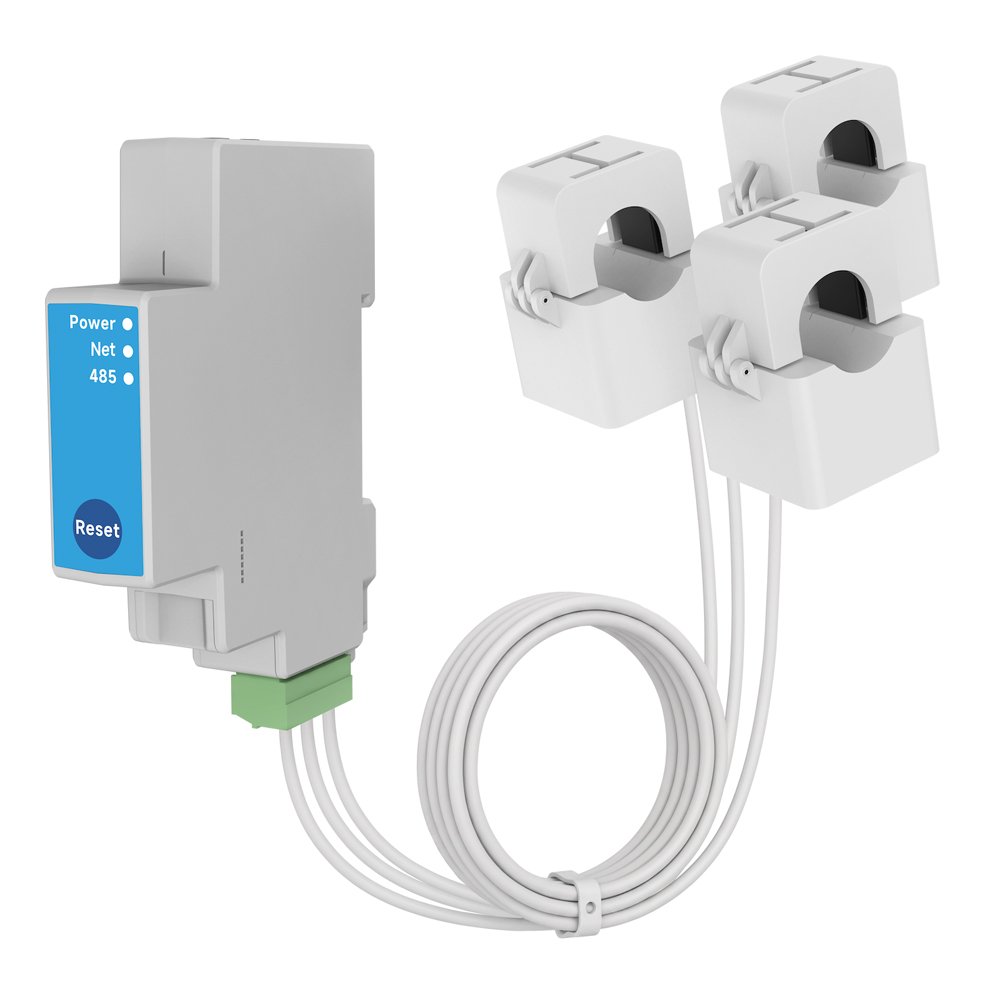
A smart energy meter is an electronic device that measures electricity consumption and communicates energy data to a connected application, gateway, or management platform.
Depending on the model, it can measure electrical parameters such as:
- Voltage (V)
- Current (A)
- Active power (W)
- Reactive power (var)
- Apparent power (VA)
- Power factor (PF)
- Frequency (Hz)
- Energy consumption (kWh)
While traditional electricity meters primarily record accumulated electricity usage, connected energy meters provide more detailed information about when, where, and how electricity is consumed.
How Does a Smart Energy Meter Work?
A smart energy meter typically combines electrical measurement, digital data processing, and communication technologies.
1. Electrical Measurement
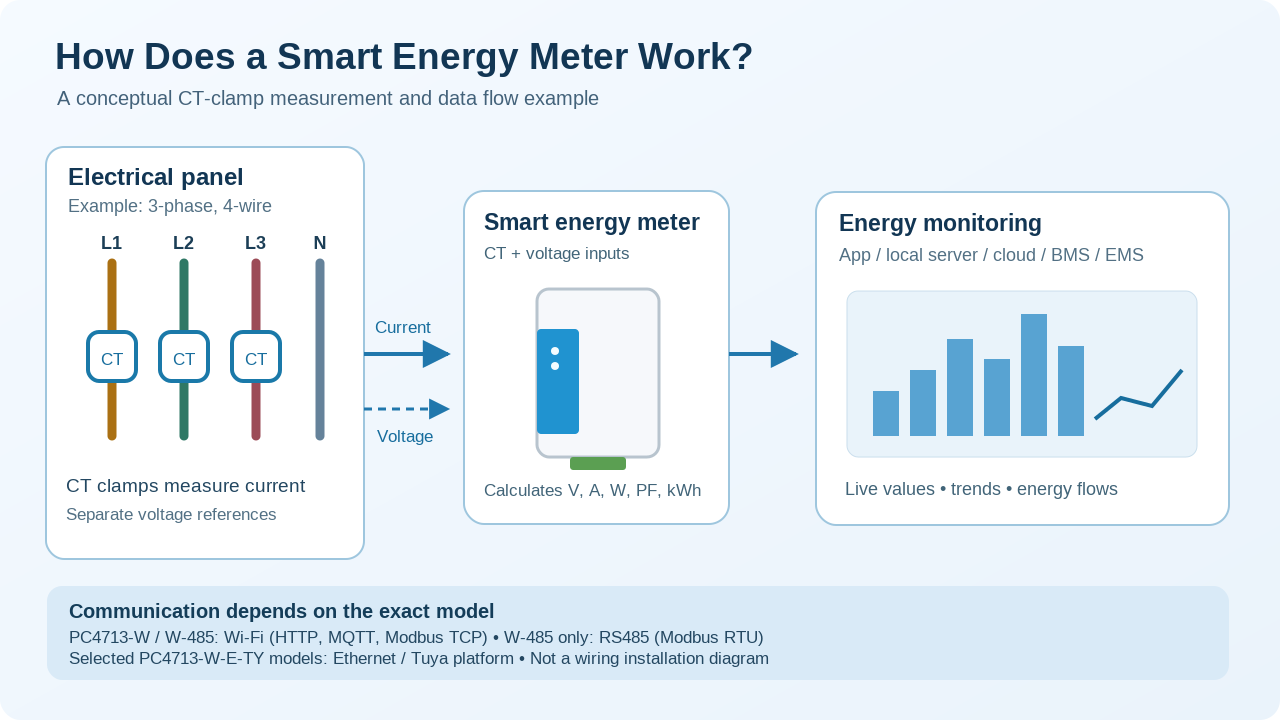
The meter measures voltage and current from the electrical system. Some meters use direct-wired connections, while others use external current transformers (CT clamps).
A CT clamp energy meter measures current by detecting the magnetic field around an electrical conductor without routing the full load current through the meter itself. This design is particularly useful for retrofitting existing electrical installations; choosing the right CT clamp size is important for conductor fit and measurement accuracy.
2. Data Processing
The meter processes voltage and current measurements to calculate electrical parameters, including active power, power factor, and accumulated energy consumption.
For example, an appliance operating at a constant 1,000 watts for two hours consumes approximately 2 kWh of electricity.
3. Data Communication
Energy data is transmitted to a mobile application, local server, gateway, or cloud platform using supported communication technologies, such as:
- WiFi
- Zigbee
- Ethernet
- RS485 Modbus
- MQTT over IP networks
The available communication methods depend on the specific meter and its intended application.
Key Functions of a Smart Energy Meter
Modern energy monitoring devices offer functions beyond basic electricity measurement.
Real-time energy monitoring: View current electricity demand and identify when high-consumption equipment is operating.
Historical energy analysis: Review daily, monthly, or longer-term consumption patterns to understand changes in electricity usage.
Bidirectional energy measurement: Monitor electricity flowing into and out of an electrical system, particularly in solar PV installations.
Remote monitoring: Access electrical data through compatible mobile applications or energy management platforms.
Smart automation: Compatible meters can trigger automation scenarios or communicate with external controllers based on electrical measurements.
Not every smart meter supports all these functions. Features vary according to hardware, firmware, and communication protocols.
Smart Energy Meter vs Utility Smart Meter
Although these terms are often used interchangeably, utility smart meters and independently installed smart energy monitors serve different purposes.
| Feature | Utility Smart Meter | Independent Smart Energy Meter |
|---|---|---|
| Primary purpose | Electricity billing | Energy monitoring and management |
| Installation | Utility or authorized provider | Qualified installer or system integrator |
| Monitoring scope | Property-level electricity usage | Whole property or selected circuits |
| Data access | Utility-dependent | App, local network, or management platform |
| Communication | Utility-managed network | WiFi, Zigbee, Ethernet, or other protocols |
| System integration | Utility-dependent | Model-dependent IoT and EMS integration |
A utility smart meter is primarily used by an electricity supplier or network operator to record electricity consumption for billing.
An independently installed smart energy meter gives property owners and energy management professionals additional control over how electrical data is accessed and used.
The two devices can operate alongside each other. An independent energy monitor does not normally replace the utility's approved billing meter.
Benefits of Using a Smart Energy Meter
Improved Energy Visibility
Real-time data helps users understand which periods, circuits, or equipment contribute most to electricity consumption.
Better Energy Efficiency
Historical consumption patterns can reveal unnecessary operating hours, excessive standby consumption, and opportunities to improve equipment scheduling.
Solar Energy Management
Bidirectional meters can help users understand grid import and export. With appropriate CT placement and system configuration, solar energy monitoring can cover grid import/export and, where supported by the setup, solar generation and household consumption.
Easier Electrical Retrofits
External CT clamps can simplify current measurement in existing electrical panels, reducing the need to modify the main current-carrying connections.
Connected Energy Management
Compatible smart meters can supply electrical data to home energy management systems (HEMS), building management systems (BMS), and energy management systems (EMS).
A smart meter does not automatically reduce electricity consumption. Actual savings depend on how users interpret the data and implement energy-saving measures.
Common Applications of Smart Energy Meters
Smart energy meters are used across residential, commercial, and industrial environments.
| Application | Monitoring Purpose |
|---|---|
| Residential buildings | Whole-home electricity consumption |
| Solar PV systems | Solar generation and grid import/export |
| EV charging | Charging circuit electricity usage |
| Commercial buildings | Equipment and building energy performance |
| HVAC systems | Heating and cooling electricity consumption |
| Industrial facilities | Electrical loads and operational energy analysis |
| Smart buildings | Connected energy management and automation |
The appropriate meter depends on the electrical system, monitoring scope, and integration requirements.
How to Choose the Right Smart Energy Meter
Before selecting an energy meter, consider the following factors. A practical guide on how to choose a smart energy meter can help you check the electrical supply, CT rating, and integration requirements.
Electrical System Compatibility
Confirm whether the installation uses single-phase, split-phase, three-phase four-wire, or three-phase three-wire electricity. A comparison of single-phase vs three-phase smart energy meters can help narrow the choice, but not every model supports every wiring configuration.
CT Clamp Capacity
Select CT clamps based on the expected operating current, conductor diameter, and measurement accuracy across the required current range.
Communication and Integration
A WiFi energy meter may be suitable for residential monitoring, while Ethernet can provide a practical alternative where wireless connectivity is unreliable. For an Open API project, review Modbus energy meter integration alongside MQTT and HTTP options; actual protocol support depends on the selected model.
Bidirectional Measurement
For solar installations, verify whether the meter supports both electricity import and export measurement.
Installation and Data Access
Consider enclosure dimensions, DIN rail compatibility, reporting intervals, offline data storage, and whether local or cloud-based data access is required.
Installation inside electrical distribution panels should be performed by qualified personnel in accordance with applicable electrical safety requirements.
Smart Energy Meter Examples for Different Applications
OWON Technology develops CT-based energy monitoring devices for different electrical systems and installation requirements.
| Model | Product Type | Recommended Application |
|---|---|---|
| PC311 | Compact single-phase WiFi energy meter | Residential and individual circuit monitoring |
| PC321 | Three-CT WiFi energy meter | Whole-home, split-phase, and three-phase monitoring |
| PC4713 | Compact DIN rail smart energy meter | Solar PV, electrical panels, and connected energy management |
The PC4713 smart energy meter family offers different communication configurations: PC4713-W supports HTTP, MQTT and Modbus TCP over Wi-Fi, PC4713-W-485 additionally supports RS485 Modbus RTU, while the Tuya -E- variants provide Ethernet. Select a model according to its specific interface requirements.
Conclusion
A smart energy meter provides valuable insight into electricity consumption, electrical performance, and energy flow. From residential monitoring to solar PV and commercial energy management, connected metering helps users make more informed operational decisions.
Choosing the right meter requires careful consideration of electrical compatibility, CT specifications, communication technologies, and integration requirements.
Related OWON products
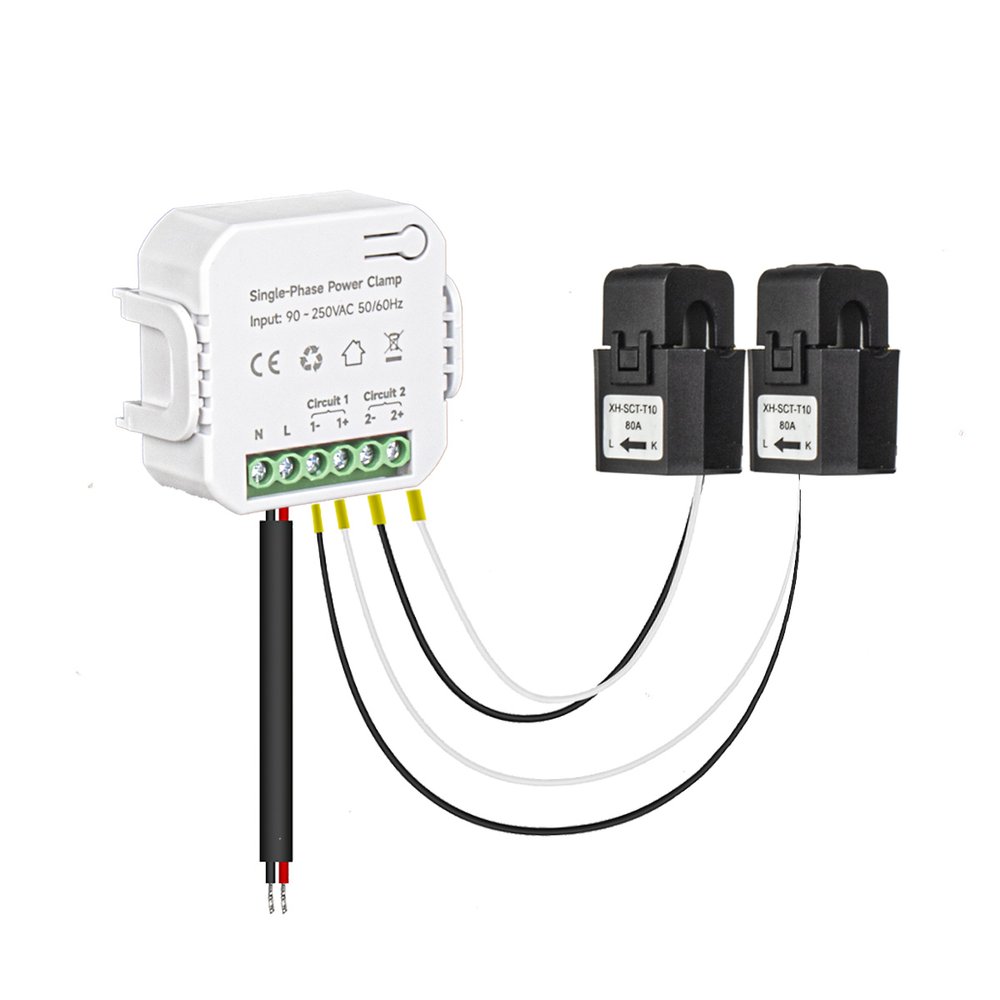 OWON PC311-W-TY/N Wi-Fi Single-Phase Power ClampCompact Wi-Fi single-phase clamp meterWi-FiTuya
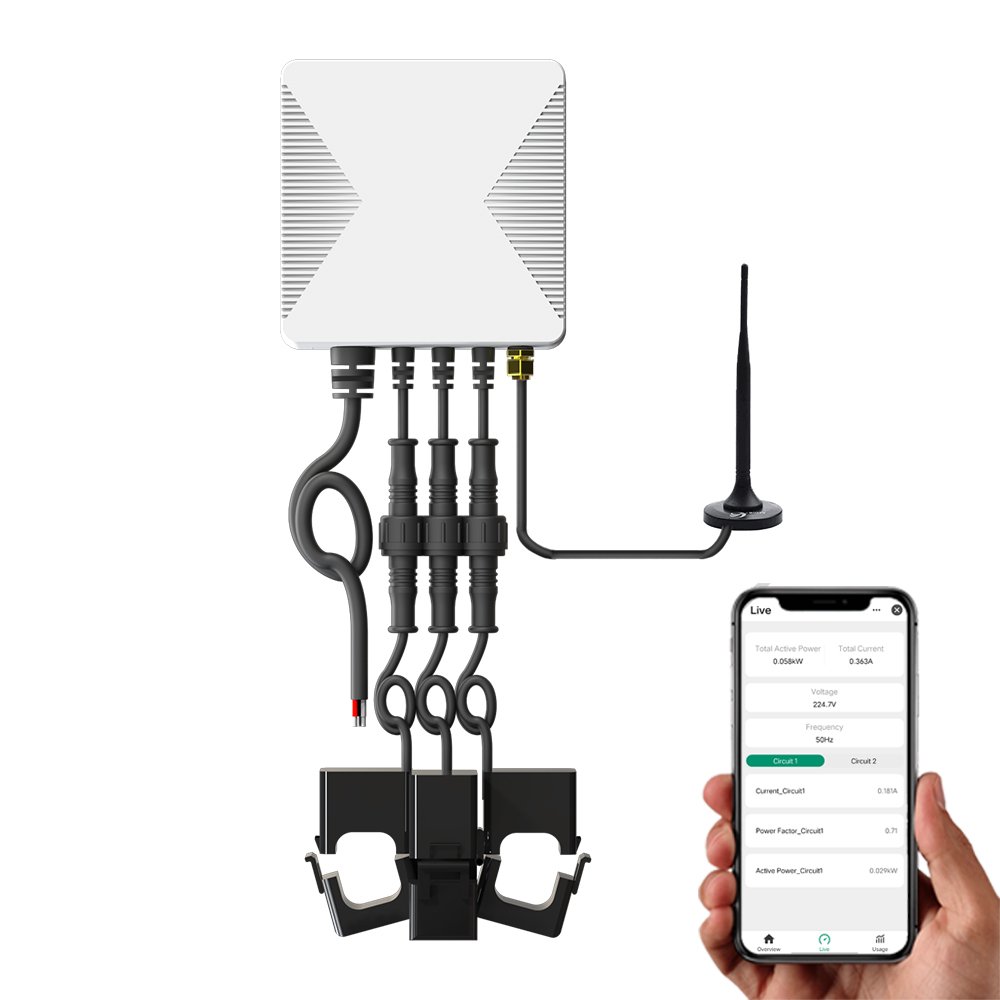 OWON PC321-W-TY/N Wi-Fi Single / 3-Phase Power ClampWi-Fi clamp-on meter for single-phase, split-phase and three-phase systemsWi-FiTuya
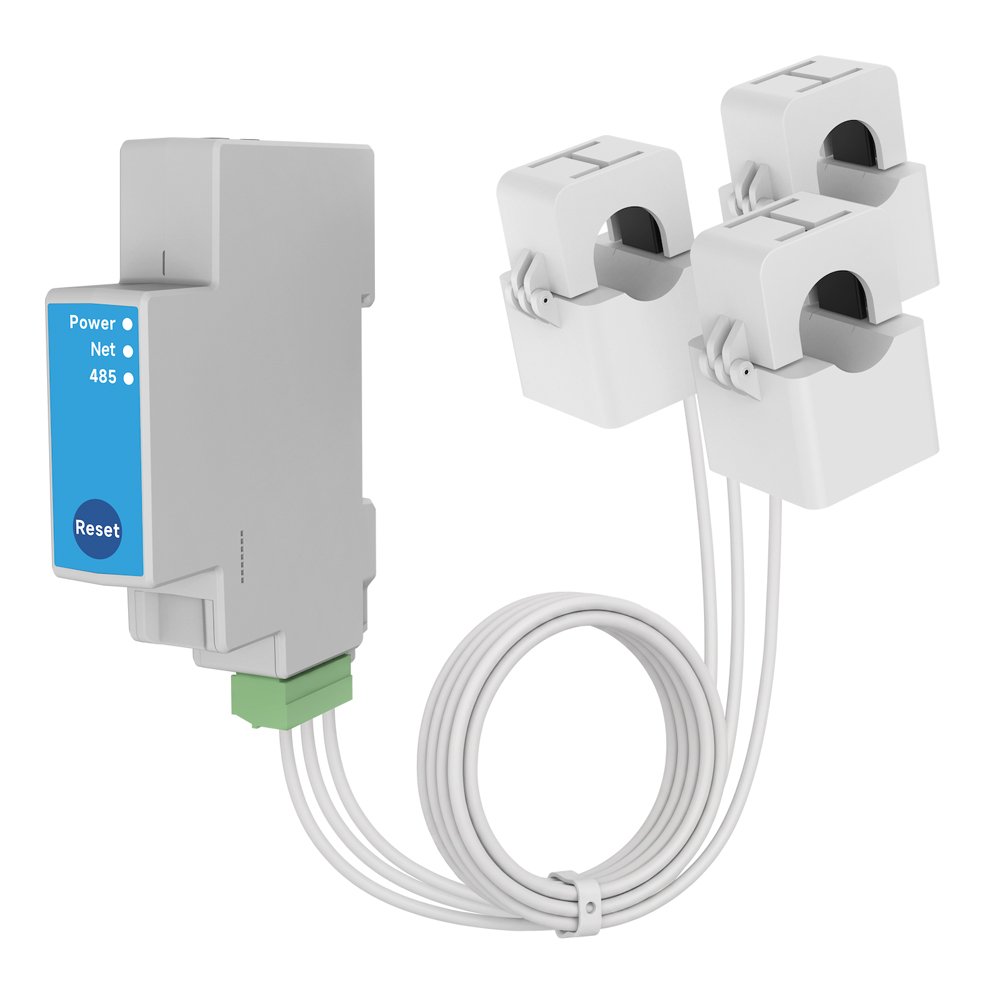 OWON PC4713-W Open API Wi-Fi Smart Energy MeterDIN rail three-phase energy meter with Open API (Wi-Fi only)Wi-FiOpen APIOWON PC4713-W-485 Open API Smart Energy MeterDIN rail three-phase energy meter with Open API (Wi-Fi and RS485)Wi-FiRS485 / EthernetOpen API
Frequently asked questions
Can a smart energy meter work without WiFi?
Yes. Depending on the model, smart meters can communicate through Zigbee, Ethernet, RS485, or other technologies. Some also support local data access or offline energy storage.
Can a smart energy meter monitor solar panels?
Yes. Compatible bidirectional meters can monitor electricity import and export, while solar generation measurement depends on CT placement and system configuration.
Does a smart energy meter save electricity?
Not directly. It provides energy data that helps users identify inefficiencies and make better energy management decisions.
Related guides
- How to Choose a Smart Energy Meter: A Buyer's ChecklistA practical checklist for choosing a smart energy meter: supply type, CT rating, accuracy, communication, integration and certifications...
- Single-Phase vs Three-Phase Smart Energy MetersLearn the difference between single-phase, split-phase and three-phase energy monitoring, and which smart meter type fits a home, building...
- How to Choose the Right CT Clamp Size for a Smart Energy MeterLearn how to choose a CT clamp rating and inner diameter for clamp-on smart energy meters, with the OWON CT options and accuracy bands from...
- Monitoring Solar Production and Grid Usage with Clamp-On Smart Energy MetersHow bidirectional smart energy meters track grid import, export and solar production, and which OWON meters list this function on their...
- PC4713 Open Series vs Tuya Series: Which Smart Energy Meter Should You Choose?Compare the OWON PC4713 Open Series (HTTP, MQTT, Modbus TCP, RS485) with the PC4713 Tuya Series (Smart Life app, Ethernet, relay) to choose...
Talk to OWON about your project
Tell us your application, target market and quantity. Our sales team replies with datasheets, protocol documents and pricing.
Send an enquiry WhatsApp +86 13159213403Or email sales@owon.com