3 Phase Smart Energy Meter: How It Works, Features, Price & Selection Guide
A 3 phase smart energy meter is an intelligent electrical measuring device that monitors electricity consumption, power demand, and other electrical parameters across three-phase power systems. With communication technologies such as WiFi, Zigbee, Ethernet, and Modbus, it enables remote energy monitoring, historical data analysis, and integration with energy management systems.
Whether you are monitoring a residential property, commercial building, solar PV system, or industrial facility, choosing the right meter requires understanding electrical compatibility, CT clamp specifications, communication options, and monitoring requirements.
This guide explains how three-phase smart meters work, their key features, what affects their price, and how to select the right device for your application.
What Is a 3 Phase Smart Energy Meter?
A three-phase smart energy meter measures electrical energy across three alternating current (AC) phases. Unlike conventional electricity meters that primarily record accumulated energy consumption, smart meters provide connected access to detailed electrical data.
Depending on the model, measurable parameters include:
- Voltage (V)
- Current (A)
- Active power (W)
- Reactive power (var)
- Apparent power (VA)
- Power factor (PF)
- Frequency (Hz)
- Energy consumption (kWh)
These measurements help users identify high-energy loads, detect phase imbalances, understand consumption patterns, and improve energy management.
Unlike utility-installed smart meters used primarily for electricity billing, privately installed smart energy monitors can provide more flexible access to energy data and integration with third-party platforms.
How Does a 3 Phase Smart Energy Meter Work?
A three-phase energy meter measures voltage and current on each phase and calculates electrical power based on these measurements. Energy consumption is then calculated by accumulating active power over time.
A typical CT-based smart metering system operates through four stages:
- Data collection: Current transformers (CTs) measure current flowing through the phase conductors.
- Power calculation: The meter processes voltage and current measurements to calculate power and energy consumption.
- Data transmission: Measurements are transmitted through WiFi, Zigbee, Ethernet, or other supported communication interfaces.
- Energy visualization: Users access real-time and historical data through mobile applications, dashboards, or energy management platforms.
This process turns conventional electrical measurements into actionable energy information.
3 Phase 3 Wire vs 3 Phase 4 Wire Smart Energy Meters
Electrical system compatibility is one of the most important considerations when selecting a three-phase meter.
| Feature | 3 Phase 3 Wire (3P3W) | 3 Phase 4 Wire (3P4W) |
|---|---|---|
| Conductors | L1, L2, L3 | L1, L2, L3, N |
| Neutral wire | No | Yes |
| Common configuration | Delta or other three-wire systems | Wye (Star) with neutral |
| Typical applications | Industrial equipment and three-phase loads | Commercial buildings and mixed electrical loads |
A 3 phase 4 wire smart energy meter is commonly used in buildings where both single-phase and three-phase loads are supplied by the same electrical system.
Not every three-phase meter supports both configurations. Always confirm the supported wiring system and operating voltage before purchasing.
3 Phase Smart Energy Meter with CT Clamps
Many modern energy monitoring devices use external current transformers instead of routing the full load current directly through the meter.
A CT clamp measures current through the magnetic field surrounding an electrical conductor. Combined with voltage measurements, the meter calculates power and energy consumption.
A three-phase energy meter with CT clamps offers several practical advantages:
- Flexible installation in existing electrical panels.
- Support for different current measurement ranges.
- Reduced need to modify existing load-current wiring.
- Compact meter design for space-constrained distribution boards.
- Suitability for residential, commercial, and industrial retrofit projects.
Common CT ratings include 80A, 120A, 200A, 300A, 500A, and 750A.
When selecting a CT, consider the expected operating current, conductor diameter, measurement accuracy at low loads, and available installation space. An oversized CT may provide less accurate measurements at very low currents.
Installation inside electrical panels should always be performed by qualified personnel following the manufacturer's wiring instructions.
3 Phase WiFi Energy Meter for Remote Monitoring
A 3 Phase WiFi Energy Meter enables users to monitor electricity consumption remotely without requiring dedicated communication cabling.
Depending on the device and software platform, users can access real-time power measurements, daily or monthly energy consumption, historical trends, and energy-related automation functions.
However, WiFi is not the only communication option available.
| Communication option | Best suited for |
|---|---|
| WiFi | Smart homes and connected energy monitoring |
| Zigbee | Smart home and building automation networks |
| Ethernet | Installations requiring stable wired connectivity |
| MQTT | Custom IoT platforms and energy management systems |
| RS485 / Modbus | Industrial automation, EMS and equipment integration |
WiFi, Zigbee, Ethernet, and RS485 provide connectivity, while MQTT and Modbus define how devices exchange data.
For professional deployments, communication reliability, local data access, reporting intervals, and software compatibility can be just as important as measurement accuracy.
Tuya 3 Phase Smart Energy Meter: Features and Benefits
A Tuya 3 phase smart energy meter allows users to monitor electricity through the Tuya Smart or Smart Life application.
Depending on the model, supported functions may include:
- Real-time electricity monitoring.
- Daily, monthly, and historical energy statistics.
- Bidirectional energy measurement.
- Energy-based automation with compatible smart devices.
- Remote relay control on relay-equipped models.
Tuya-compatible meters are particularly suitable for smart homes, connected buildings, and businesses seeking an established application ecosystem without developing their own monitoring software.
For projects requiring custom dashboards, local data access, or direct backend integration, MQTT or Modbus-enabled meters may be more appropriate.
Historical Data and Solar Energy Monitoring
Real-time measurements show how much electricity is being used at a particular moment, while historical data helps identify longer-term consumption patterns.
When choosing a 3 phase power meter with data logging capabilities, check its reporting interval, storage method, data retention period, and export options.
For solar PV and battery storage applications, a bidirectional energy meter can measure electricity imported from and exported to the grid.
With appropriate meter placement and system configuration, bidirectional monitoring helps users understand grid dependency, solar energy production, and energy consumption patterns.
However, solar monitoring does not automatically mean that a meter supports inverter communication or zero-export control. These functions require verified compatibility with the relevant equipment and control system.
How Much Does a 3 Phase Smart Energy Meter Cost?
The price of a three-phase smart energy meter varies according to its measurement capabilities, connectivity, installation design, and integration requirements.
The main factors affecting a 3 phase smart energy meter price include:
- CT specifications: Current ratings, clamp dimensions, and the number of measurement channels.
- Measurement performance: Accuracy, supported electrical parameters, and data refresh rates.
- Communication options: WiFi, Zigbee, Ethernet, MQTT, or Modbus connectivity.
- Additional functions: Relay outputs, offline data storage, alarms, and bidirectional measurement.
- Software integration: Mobile applications, open APIs, and third-party platform compatibility.
- Purchase quantity: Wholesale volumes, OEM customization, and technical support requirements.
For commercial projects, buyers should evaluate the total deployment cost, including installation, gateways where required, software integration, and ongoing maintenance, rather than comparing hardware prices alone.
How to Choose the Right 3 Phase Smart Energy Meter
Before selecting a meter, consider the following questions:
- Does your electrical system use 3P3W or 3P4W?
- What CT current rating and clamp diameter are required?
- Do you need whole-building or individual circuit monitoring?
- Is WiFi sufficient, or is wired communication preferred?
- Do you require solar monitoring, relay control, or local data access?
- Does the meter support your existing energy management platform?
The right combination of these features depends on the installation environment and the intended application.
OWON 3 Phase Smart Energy Meter Solutions
OWON Technology develops CT-based smart energy meters for residential energy monitoring, commercial buildings, solar PV applications, and professional energy management systems.
Its product portfolio covers different measurement, connectivity, and integration requirements.
| Model | Key features | Recommended applications |
|---|---|---|
| PC321 | Three CT clamps, WiFi or Zigbee versions, bidirectional monitoring | Whole-building energy monitoring |
| PC4713 | Compact DIN rail design; WiFi Open API, Ethernet Tuya, or RS485 Modbus RTU depending on version | Solar, EMS and system integration |
| PC473 | Three-phase energy measurement; dry-contact relay output on relay-equipped /R variants | Energy-based automation and equipment control |
| PC341 | Main supply monitoring and up to 16 individual circuits | Multi-circuit energy monitoring and load analysis |
For projects requiring flexible whole-building monitoring, the PC321 provides a practical CT-based solution. The PC4713 series offers compact installation and multiple communication options across different versions.
The PC473 combines energy measurement with relay control on supported relay-equipped variants, while the PC341 provides more detailed visibility into individual electrical circuits.
Electrical compatibility, communication protocols, and additional functions vary by model and version. Buyers should confirm the relevant specifications before deployment.
OWON also provides OEM/ODM customization and technical integration support for distributors, system integrators, smart home brands, and energy solution providers.
Conclusion
A 3 phase smart energy meter provides more than electricity consumption measurements. With CT clamp technology, connected monitoring, historical data, and flexible integration options, it can support more effective energy management across residential, commercial, solar, and industrial applications.
The best choice depends on electrical system compatibility, CT specifications, communication requirements, and the level of monitoring or control needed.
Selecting the right meter from the beginning can simplify installation, improve energy visibility, and support future energy management requirements.
Related OWON products
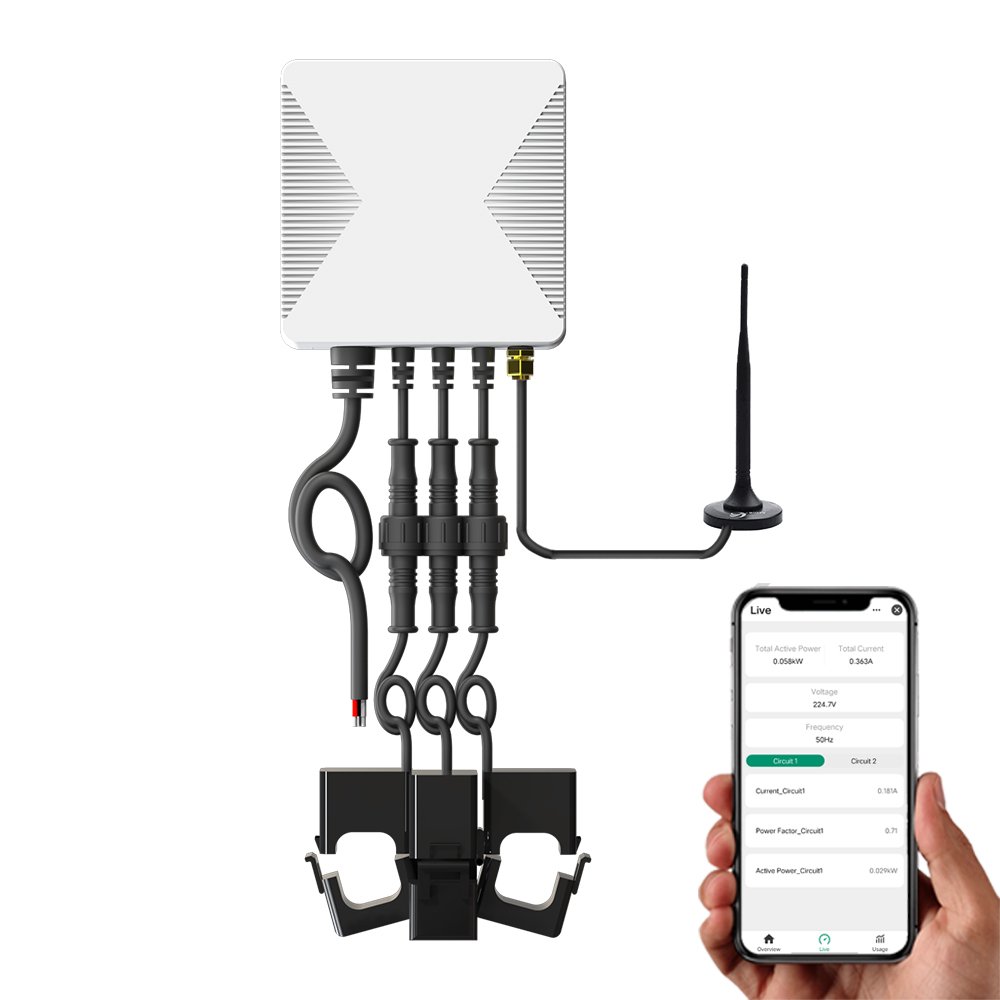 OWON PC321-W-TY/N Wi-Fi Single / 3-Phase Power ClampWi-Fi clamp-on meter for single-phase, split-phase and three-phase systemsWi-FiTuya
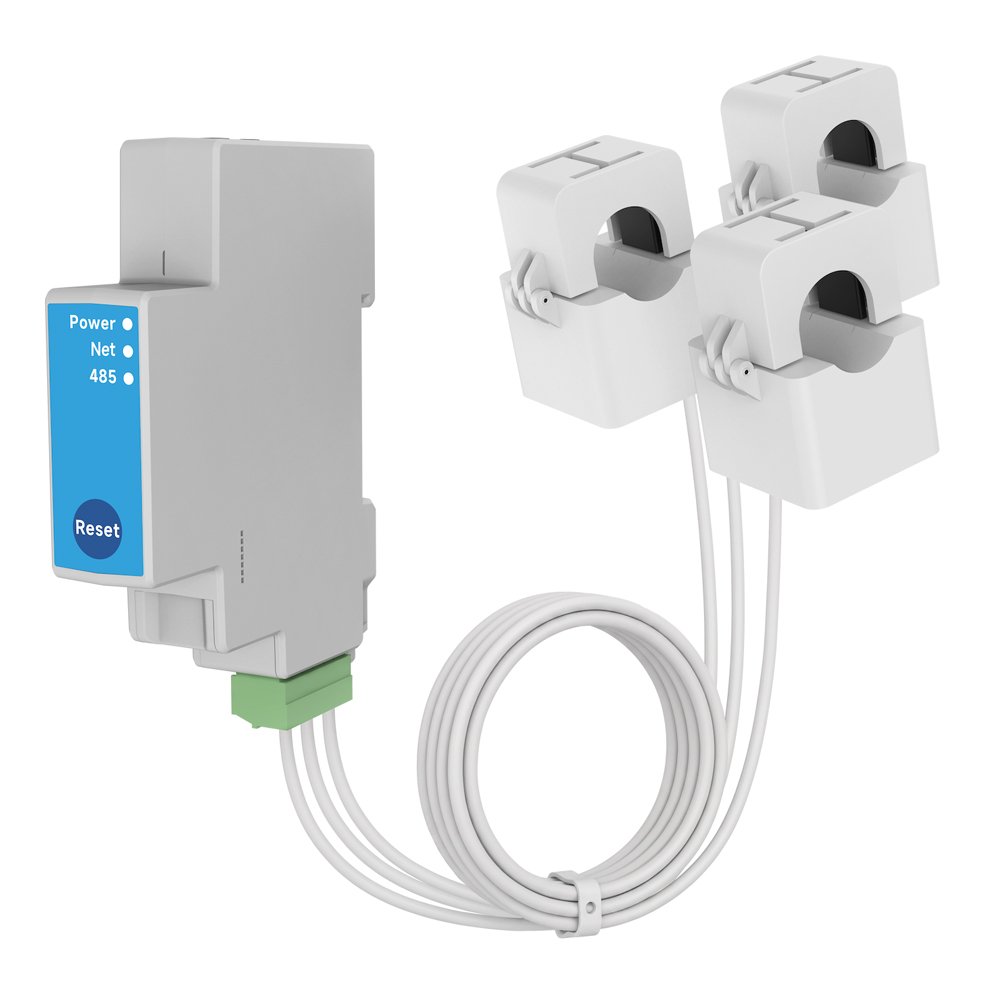 OWON PC4713-W-485 Open API Smart Energy MeterDIN rail three-phase energy meter with Open API (Wi-Fi and RS485)Wi-FiRS485 / EthernetOpen API
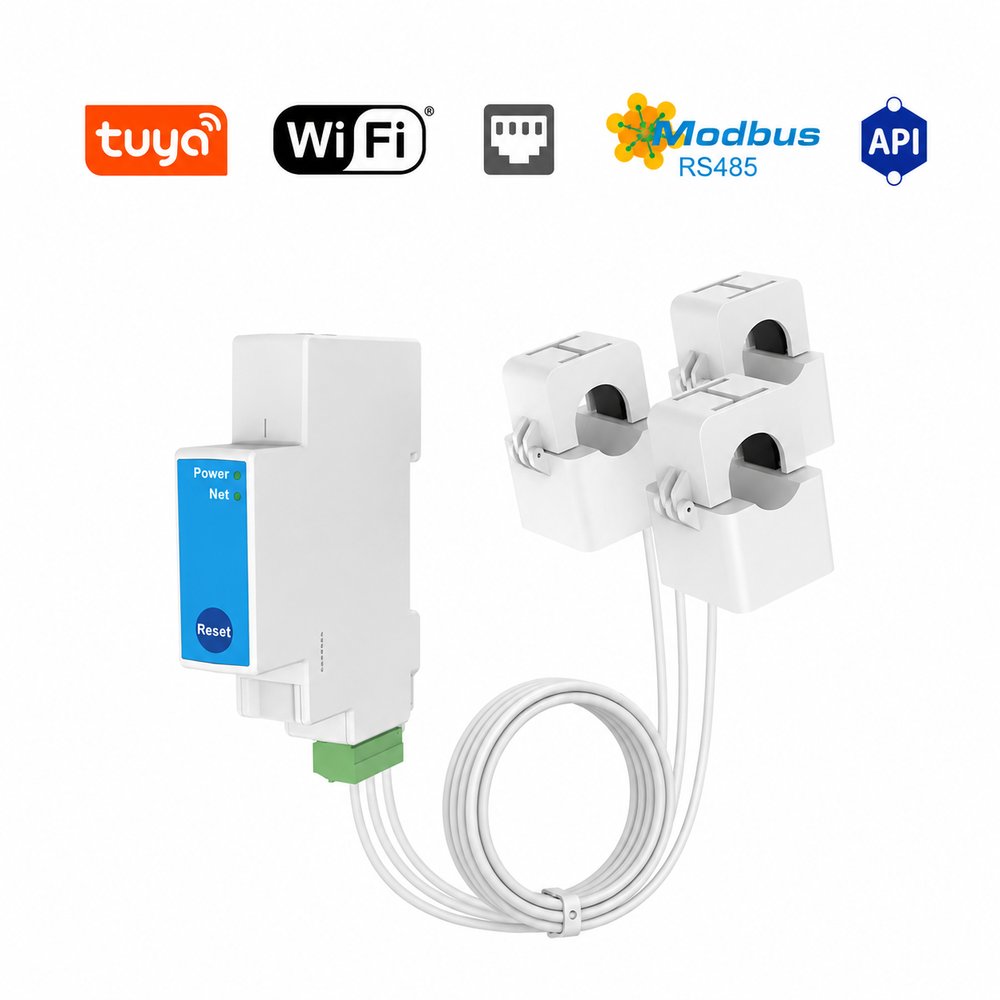 OWON PC4713-W-E-TY/3W Tuya Smart Energy Meter (Wi-Fi + Ethernet)DIN rail three-phase energy meter, Tuya compliant, Wi-Fi and EthernetWi-FiRS485 / EthernetTuya
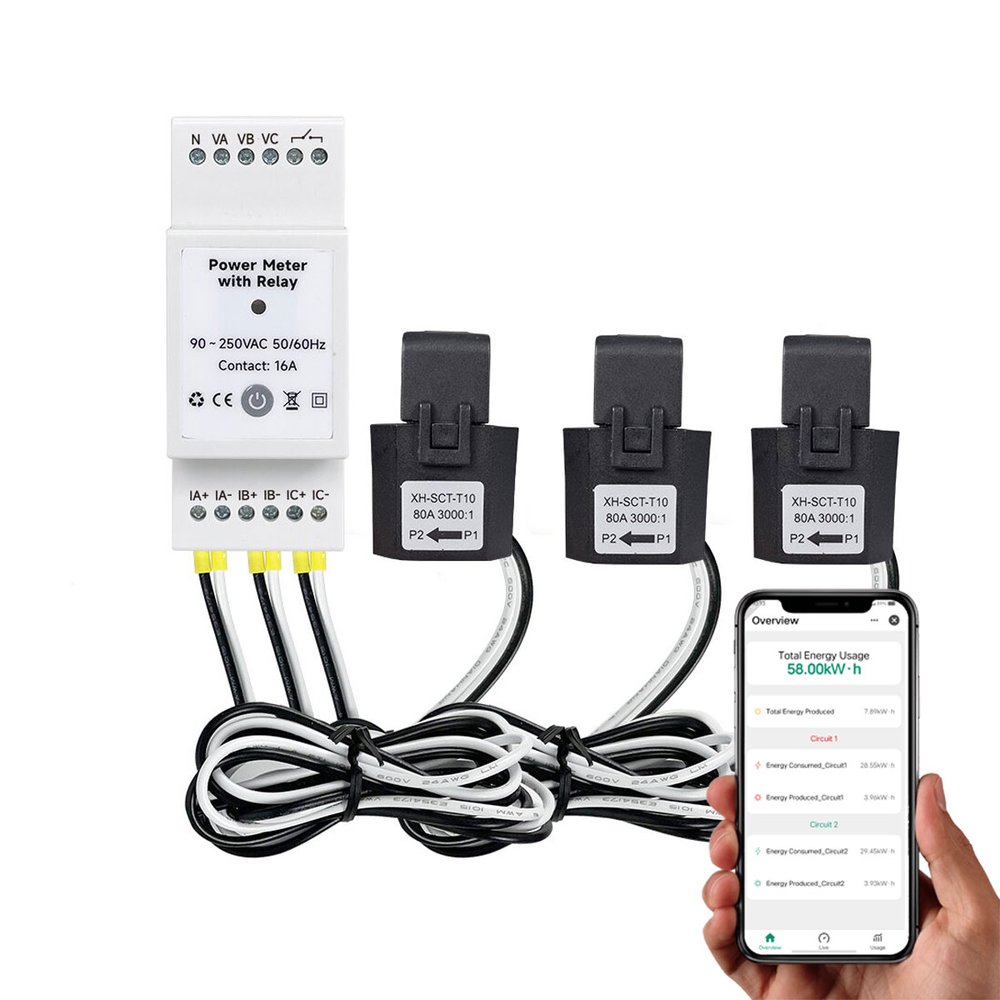 OWON PC473 Wi-Fi Power Meter with RelayDIN rail single / three-phase Wi-Fi meter with 16 A relayWi-FiTuya
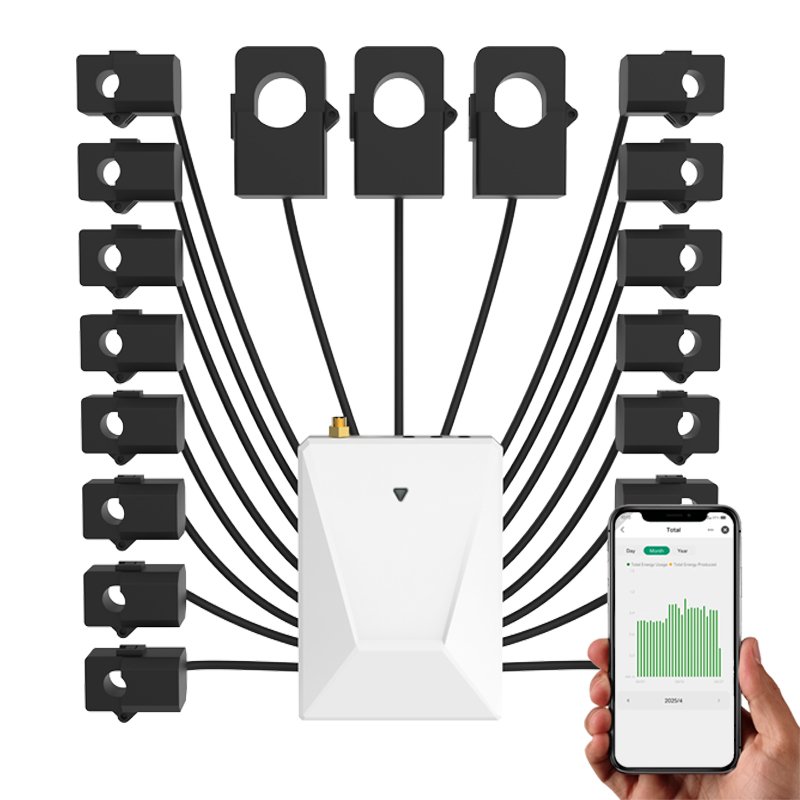 OWON PC341 Wi-Fi Multi-Circuit Energy MonitorWi-Fi multi-circuit meter: whole-home plus up to 16 individual circuitsWi-FiTuya
Frequently asked questions
Can a 3 phase smart energy meter be used for single-phase monitoring?
Yes. Some three-phase meters also support single-phase and split-phase systems. Always verify the supported electrical configurations of the selected model.
Can a three-phase energy meter monitor each phase separately?
Yes. Compatible meters can provide individual voltage, current, and power measurements for each phase, helping users identify uneven load distribution.
Can a smart energy meter work without an internet connection?
Some models support local data access through a local network or RS485 communication. Others depend on cloud-connected applications for remote monitoring. Offline storage capabilities also vary by model.
Can a 3 phase smart energy meter reduce electricity bills?
An energy meter does not directly reduce electricity consumption. However, its data can help identify inefficient equipment, unnecessary consumption, and opportunities for energy optimization.
Related guides
- Single-Phase vs Three-Phase Smart Energy MetersLearn the difference between single-phase, split-phase and three-phase energy monitoring, and which smart meter type fits a home, building...
- Monitoring Solar Production and Grid Usage with Clamp-On Smart Energy MetersHow bidirectional smart energy meters track grid import, export and solar production, and which OWON meters list this function on their...
- PC4713 Open Series vs Tuya Series: Which Smart Energy Meter Should You Choose?Compare the OWON PC4713 Open Series (HTTP, MQTT, Modbus TCP, RS485) with the PC4713 Tuya Series (Smart Life app, Ethernet, relay) to choose...
Talk to OWON about your project
Tell us your application, target market and quantity. Our sales team replies with datasheets, protocol documents and pricing.
Send an enquiry WhatsApp +86 13159213403Or email sales@owon.com